In this post, you’ll learn how a consistent fleet washing program cuts repair costs, extends equipment life, improves safety, and protects one of your biggest business investments.
When budgets tighten, vehicle washing is often one of the first maintenance tasks to get pushed down the priority list. After all, if a truck still runs, does it really matter if it’s dirty.
In reality, regular fleet washing isn’t just about appearance. It’s one of the simplest and most cost-effective ways to protect the equipment you’ve already invested in.
Whether you manage delivery vans, utility trucks, construction equipment, municipal vehicles, or heavy machinery, a consistent washing program can reduce repair costs, improve safety, extend equipment life, and save valuable labor hours.
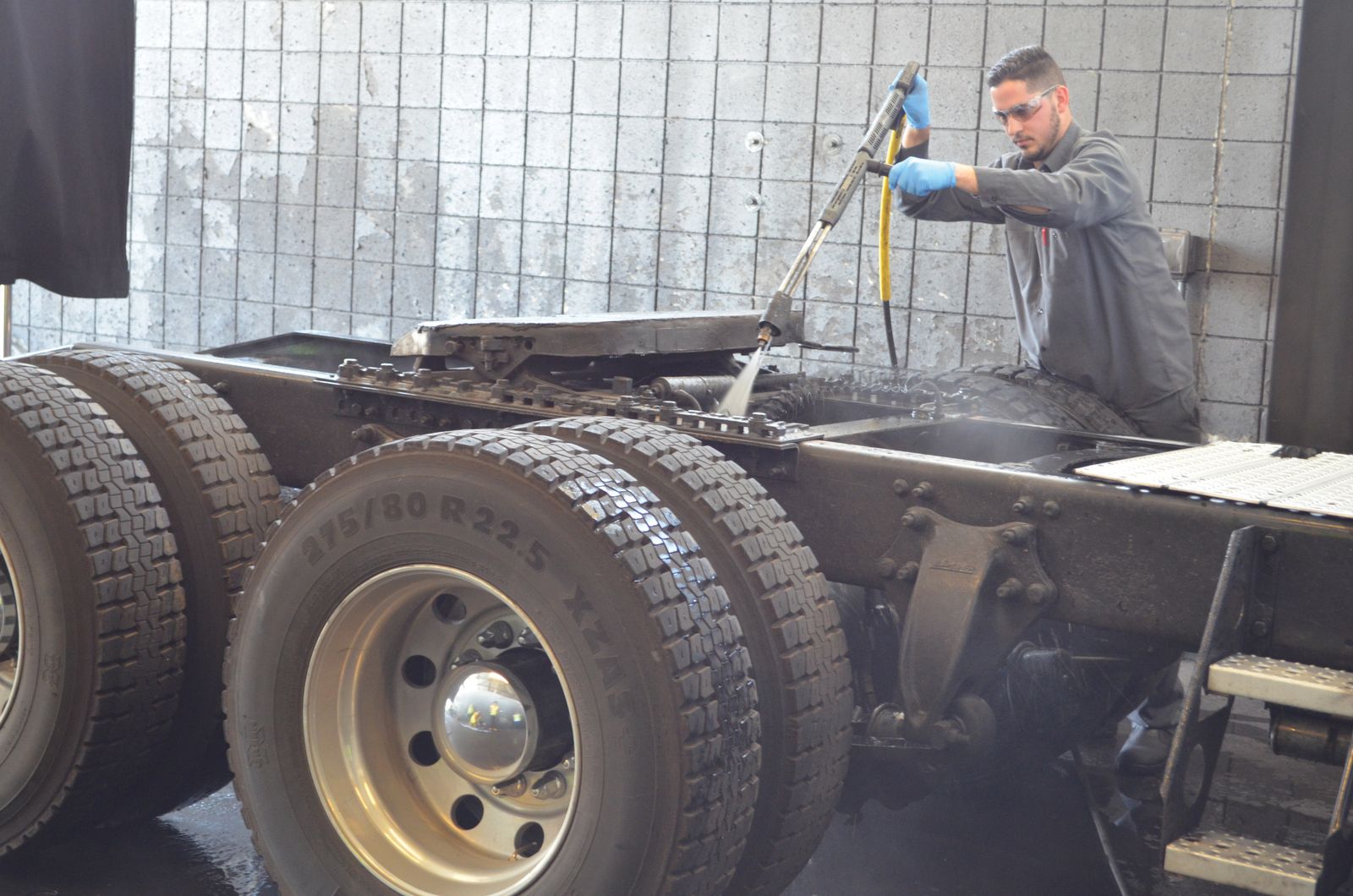
Dirt Doesn’t Just Look Bad—It Hides Expensive Problems
One of the biggest advantages of keeping equipment clean is that it makes inspections easier.
Hydraulic leaks, cracked hoses, loose fittings, damaged wiring, and worn seals are much easier to spot on a clean machine than one covered in layers of mud, grease, or road grime.
Many costly repairs begin as small issues that simply go unnoticed. Routine washing gives technicians and operators a chance to identify problems early—before they become unexpected downtime that disrupts schedules and increases repair costs.
Corrosion Never Takes a Day Off
If your fleet operates in Colorado, Wyoming, or anywhere that sees snow, you’re already familiar with the damage done by road salt and de-icing chemicals.
Construction and industrial equipment face additional challenges from concrete dust, fertilizer, lime, and other corrosive materials that cling to metal long after the job is finished.
Left untreated, these contaminants attack:
- Frames and chassis
- Brake components
- Electrical connectors
- Hydraulic fittings
- Undercarriages
- Paint and protective coatings
Regular washing removes these materials before corrosion has a chance to take hold, helping your vehicles and equipment stay in service longer while reducing costly repairs.
A Clean Machine Is Safer to Work On
Grease, mud, and debris don’t just make equipment difficult to clean. They also create unnecessary hazards.
Dirty equipment can hide damaged safety decals, obscure fluid leaks, and make steps and handholds slippery. Clean equipment creates a safer environment for operators and technicians while making preventive maintenance faster and more effective.
Consistent Washing Reduces Labor Costs
Anyone who’s tried removing months of baked-on grease knows the difference.
The longer contaminants remain on equipment, the more labor, detergent, water, and time it takes to remove them.
A truck that’s washed weekly may only require 15 to 20 minutes to clean. That same truck after months of neglect could require an hour or more—not because the equipment changed, but because the buildup did.
Consistency almost always costs less than catch-up cleaning.
Consistency almost always costs less than catch-up cleaning. The longer contaminants stay on equipment, the more labor, detergent, water, and time it takes to remove them later.
Your Fleet Is a Rolling Advertisement
Every vehicle that leaves your facility represents your company.
Whether you’re a contractor arriving at a jobsite, a municipality serving residents, or a transportation company making deliveries, customers notice the condition of your equipment. A clean fleet communicates professionalism, attention to detail, and pride in your work — impressions that help build trust and reinforce your reputation every day.
The Right Wash Bay Makes All the Difference
Even the best cleaning schedule is difficult to maintain if your wash bay isn’t designed for efficiency.
A well-equipped commercial wash bay typically includes:
- A commercial hot or cold water pressure washer
- High-quality detergents matched to your application
- Foam application systems
- Hose reels for organization and safety
- Surface cleaners for maintaining wash bay floors
- Water recovery systems where environmental regulations require them
When the right equipment is in place, operators spend less time washing and more time doing the work that generates revenue.
Fleet Washing Is Preventive Maintenance
Most businesses don’t question the importance of changing engine oil, replacing filters, or following preventive maintenance schedules.
Fleet washing deserves to be viewed the same way.
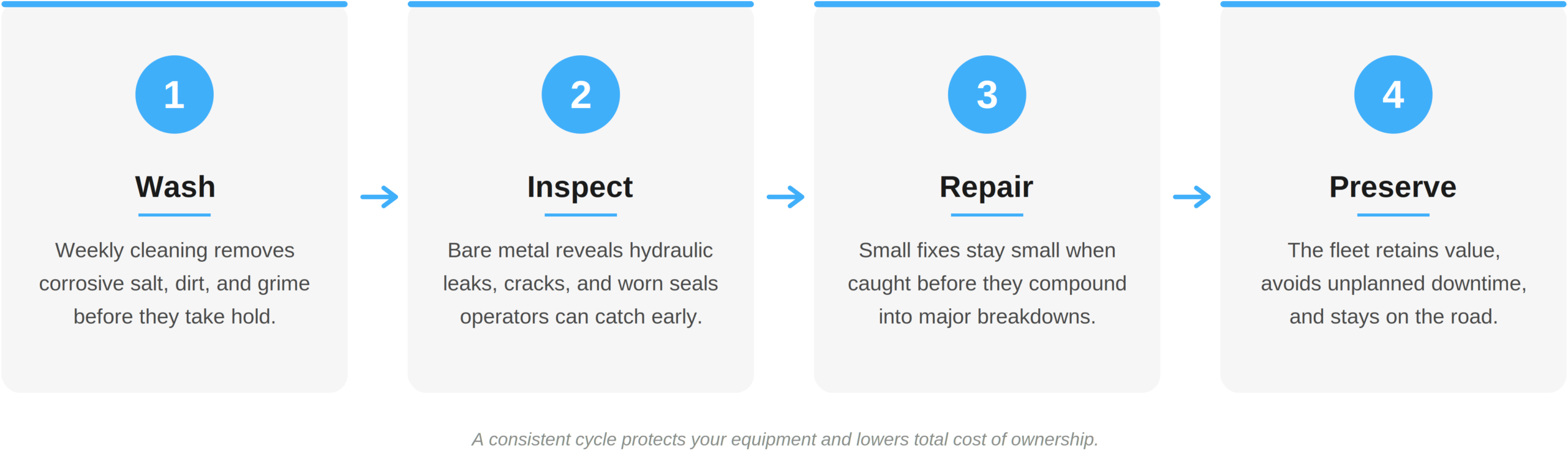
Removing corrosive materials, exposing mechanical issues before they become major repairs, improving safety, and reducing cleaning labor all contribute to lowering the total cost of ownership for every vehicle in your fleet.
It’s a relatively small investment that helps protect one of your company’s largest assets.
The Bottom Line
Fleet washing isn’t an unnecessary expense. It’s an investment in equipment reliability, employee safety, and long-term profitability.
By implementing a consistent cleaning program and equipping your wash bay with the right pressure washer, detergents, accessories, and water recovery equipment, you’ll spend less time dealing with preventable repairs and more time keeping your fleet on the road.
At H2O Power Equipment, we’ve helped municipalities, contractors, fleet operators, and industrial facilities throughout Colorado and Wyoming build wash bay solutions that improve efficiency, reduce maintenance costs, and keep equipment looking and performing its best.
Denver Headquarters
H2O Power Equipment | (303) 287-7561 | Mon–Fri: 7:30 AM – 4:30 PM
Colorado Springs
H2O Power Equipment | (719) 434-4779 | Mon–Fri: 7:30 AM – 4:00 PM