In this post, you’ll learn how portable water reclamation helps pressure washing contractors cut freshwater use, meet environmental regulations, and win bigger contracts — with a real-world example from Denver International Airport.
As water shortages, drought conditions, and environmental regulations continue to impact communities across the country, pressure washing contractors are being challenged to do more with less.
Today, success isn’t just about cleaning efficiently. It’s also about conserving water, protecting the environment, and operating responsibly. That’s where wash water recovery and portable water reclamation systems are making a significant difference.
Why Wash Water Recovery Matters
Pressure washing generates wastewater that often contains dirt, sediment, oil, grease, tire residue, detergents, and other contaminants. If this wastewater is allowed to enter storm drains, it can reach local waterways without treatment — creating environmental concerns and potential regulatory violations.
Many municipalities, airports, government facilities, and commercial property owners now require contractors to recover wash water as part of their environmental compliance programs.
For professional contractors, wash water recovery has become an essential part of doing business.
Beyond Recovery: The Evolution to Water Reclamation
Traditionally, wash water recovery focused on capturing wastewater and disposing of it. Today, many contractors are taking the next step with portable water reclamation — recovering, filtering, and in some cases reusing water during cleaning operations.
Benefits of water reclamation:
- Reduced freshwater consumption
- Lower operating costs
- Increased productivity on large projects
- Reduced environmental impact
- Improved drought resilience
- Enhanced sustainablity practices
As water becomes an increasingly valuable resource, reclaiming that water rather than simply disposing of it makes both environmental and business sense.
Drought Conditions Make Conservation Critical
Many western states, including Colorado, continue to experience periodic drought and increasing pressure on water resources. Municipalities and water districts are actively encouraging businesses and contractors to reduce unnecessary water consumption.
For pressure washing contractors, water reclamation is an opportunity to be part of the solution — conserving a precious resource while delivering the cleaning results customers expect.
By recovering and filtering wash water for reuse, contractors can significantly reduce their dependence on freshwater supplies while continuing to deliver the cleaning results their customers expect. This not only helps conserve a precious resource but also demonstrates environmental stewardship that customers increasingly value.
A Real-World Example: Cleaning DIA Parking Garages
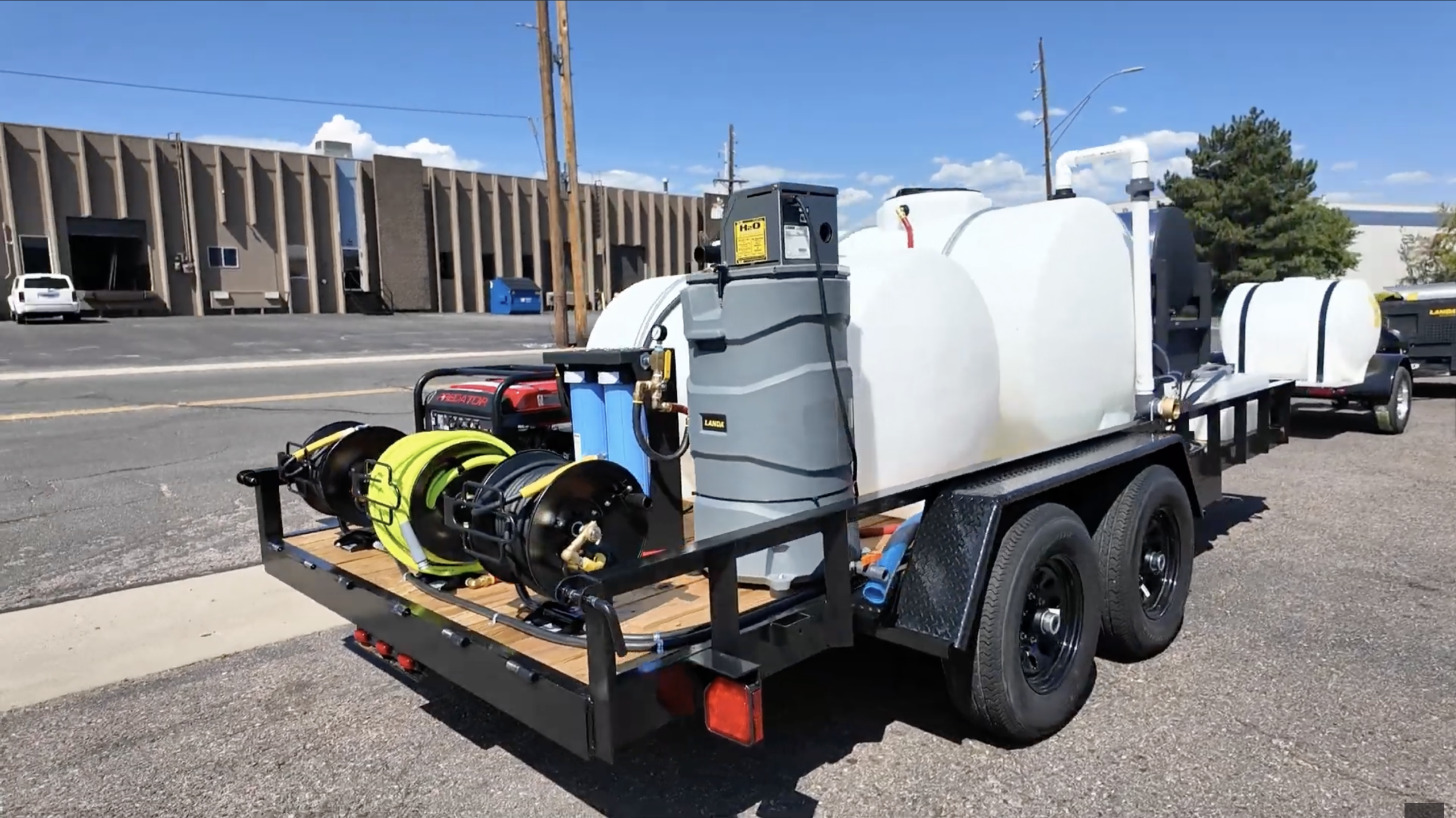
One mobile contract cleaning company servicing parking structures at Denver International Airport (DIA) has implemented a practical portable water reclamation strategy using equipment supplied by H2O Power Equipment.
The contractor utilizes a Landa MWP-30E Water Recovery System paired with a WaterMaze Filter VacPac filtration accessory to recover, filter, and reuse wash water during parking garage cleaning operations.
Parking structures present unique challenges. Large surface areas accumulate dirt, oil, grease, tire residue, and deicing chemicals that require substantial water to remove.
Rather than relying solely on fresh water throughout the project, the contractor is able to recover wash water, filter it, and reuse it for continued cleaning operations.
The result is:
- Reduced freshwater consumption
- Improved operational efficiency
- Less wastewater requiring disposal
- Enhanced environmental responsibility
- Support for sustainability initiatives
Recovering wash water isn’t just about compliance anymore —
it’s about creating smarter, more sustainable ways to clean
The Landa MWP-30E and WaterMaze Filter VacPac Solution
At H2O Power Equipment, we help contractors implement practical wash water recovery and reclamation solutions that fit real-world jobsite conditions.
The Landa MWP-30E is designed to recover and transfer wash water generated during pressure washing operations. When paired with the WaterMaze Filter VacPac filtration accessory, contractors gain an additional layer of filtration that helps remove solids and contaminants from recovered water.
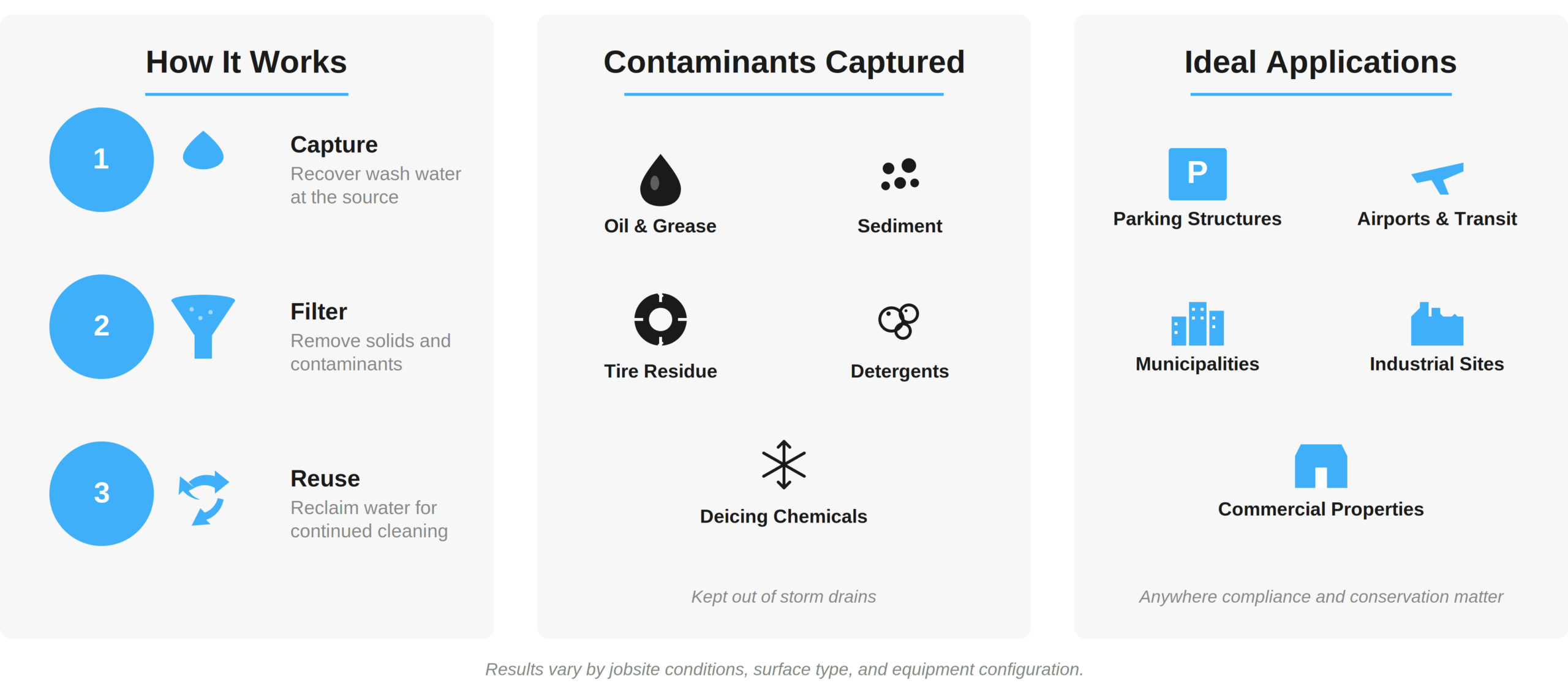
Together, these systems give contractors a portable water reclamation solution that can:
- Capture wash water at the source
- Prevent contaminated runoff from entering storm drains
- Filter recovered water for reuse
- Support environmental compliance
- Improve sustainability efforts
- Reduce freshwater usage
- Create opportunities for water reuse in appropriate applications
For contractors working in municipalities, airports, transportation facilities, parking structures, industrial sites, and commercial properties, this combination offers a practical approach to modern water management.
Environmental Responsibility Creates Business Opportunities
Increasingly, Facility managers, municipalities, and government agencies are looking for contractors who can demonstrate environmentally responsible practices.
Water reclamation capabilities help you:
- Meet project specifications
- Satisfy environmental requirements
- Differentiate from competitors
- Support customer sustainability goals
- Prepare for future regulatory changes
What was once considered an optional service is quickly becoming an expected part of professional pressure washing operations.
The Future of Pressure Washing Is Sustainable
The pressure washing industry continues to evolve as environmental awareness, water conservation, and regulatory compliance become increasingly important.
Portable water reclamation systems let contractors protect natural resources, reduce consumption, and operate more efficiently — all while maintaining the high cleaning standards their customers demand.
As demonstrated by contractors performing large-scale projects such as the parking garages at Denver International Airport, water reclamation isn’t just about compliance anymore. It’s about creating smarter, more sustainable ways to clean.
At H2O Power Equipment, we’re proud to help contractors implement practical water recovery and reclamation solutions that support both business success and environmental responsibility.
Contact H2O Power Equipment to learn more about the Landa MWP-30E Water Recovery System, the WaterMaze Filter VacPac, and how portable water reclamation can benefit your operation.
Denver Headquarters
H2O Power Equipment | (303) 287-7561 | Mon–Fri: 7:30 AM – 4:30 PM
Colorado Springs
H2O Power Equipment | (719) 434-4779 | Mon–Fri: 7:30 AM – 4:00 PM