In this post, you’ll learn ten preventive maintenance practices that keep your waste oil heater running efficiently, reduce unexpected downtime, and extend the life of your equipment.
A waste oil heater can turn something your business already produces—used oil—into a valuable source of heat. For automotive shops, equipment dealers, fleet facilities, farms, and other businesses that generate waste oil, that can mean lower heating costs and less waste to dispose of.
But like any piece of heating equipment, a waste oil heater needs regular attention to continue operating efficiently and reliably.
Waste oil can contain contaminants and impurities that you wouldn’t typically find in conventional heating fuels. Over time, those materials can create buildup, affect combustion, and put unnecessary stress on the system if routine maintenance is overlooked.
A little preventive maintenance can go a long way toward reducing unexpected downtime, improving heating performance, and extending the life of your equipment. Here are some of the most important ways to keep your waste oil heater running at its best.
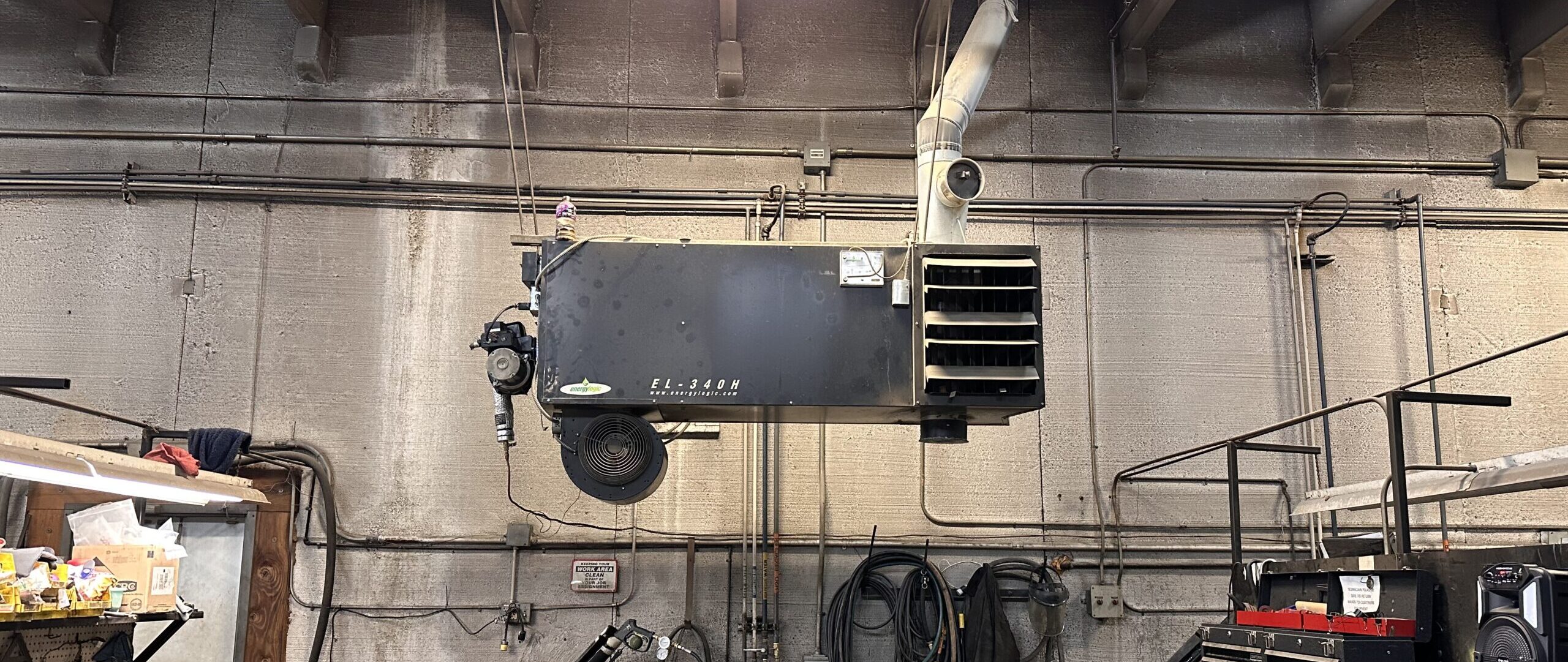
Start With Good Quality Waste Oil
Your maintenance program actually starts before the oil reaches the heater.
Not everything that looks like used oil belongs in a waste oil heating system. Water, antifreeze, solvents, brake cleaner, and other contaminants can cause operating problems and may damage components.
Keeping your waste oil storage as clean as possible helps protect the entire system.
Make sure employees know what can and cannot be added to your waste oil supply, and follow the fuel requirements specified by your heater’s manufacturer.
Better fuel going in means fewer problems to deal with later.
Keep Water Out of Your Waste Oil
Water is one of the biggest enemies of a waste oil heating system.
It can enter waste oil through outdoor storage, condensation, coolant contamination, or improper disposal practices around the shop.
Once contaminated oil reaches the heating system, it can interfere with combustion and contribute to poor performance.
Regularly inspect your waste oil supply and storage system for signs of water contamination. Addressing the source of the problem is much better than repeatedly dealing with the symptoms at the heater.
Clean and Inspect the Burner Regularly
The burner is at the heart of your waste oil heater.
Because waste oil varies in composition and cleanliness, deposits can accumulate over time. Routine burner inspection and cleaning help maintain proper combustion and reduce unnecessary strain on the system.
Maintenance intervals vary depending on the heater, fuel quality, and amount of use, so always follow the manufacturer’s recommended maintenance schedule.
If you’re noticing harder starts, unusual smoke, inconsistent heating, or frequent shutdowns, don’t simply keep resetting the unit. Those symptoms may be telling you that the system needs attention.
Don’t Ignore Filters & Strainers
Filters and strainers help prevent contaminants from reaching critical components of your waste oil heating system.
When they become restricted, oil flow can suffer and the heater may not receive the consistent fuel supply it needs.
Inspect and service filters according to the manufacturer’s recommendations, and pay attention to whether you’re needing to service them more frequently than normal.
Repeatedly clogged filters can sometimes point to a bigger issue with the quality of the waste oil being stored and burned.
Keep the Heat Exchanger Clean
The heat exchanger plays an important role in transferring the heat produced by combustion into your building.
As deposits accumulate, heat transfer can become less effective. Your heater may have to work harder to produce the same results, reducing efficiency and potentially contributing to other operating problems.
Cleaning the heat exchanger at the appropriate intervals helps maintain efficient heat transfer and gives you an opportunity to inspect the equipment for other signs of wear or buildup.
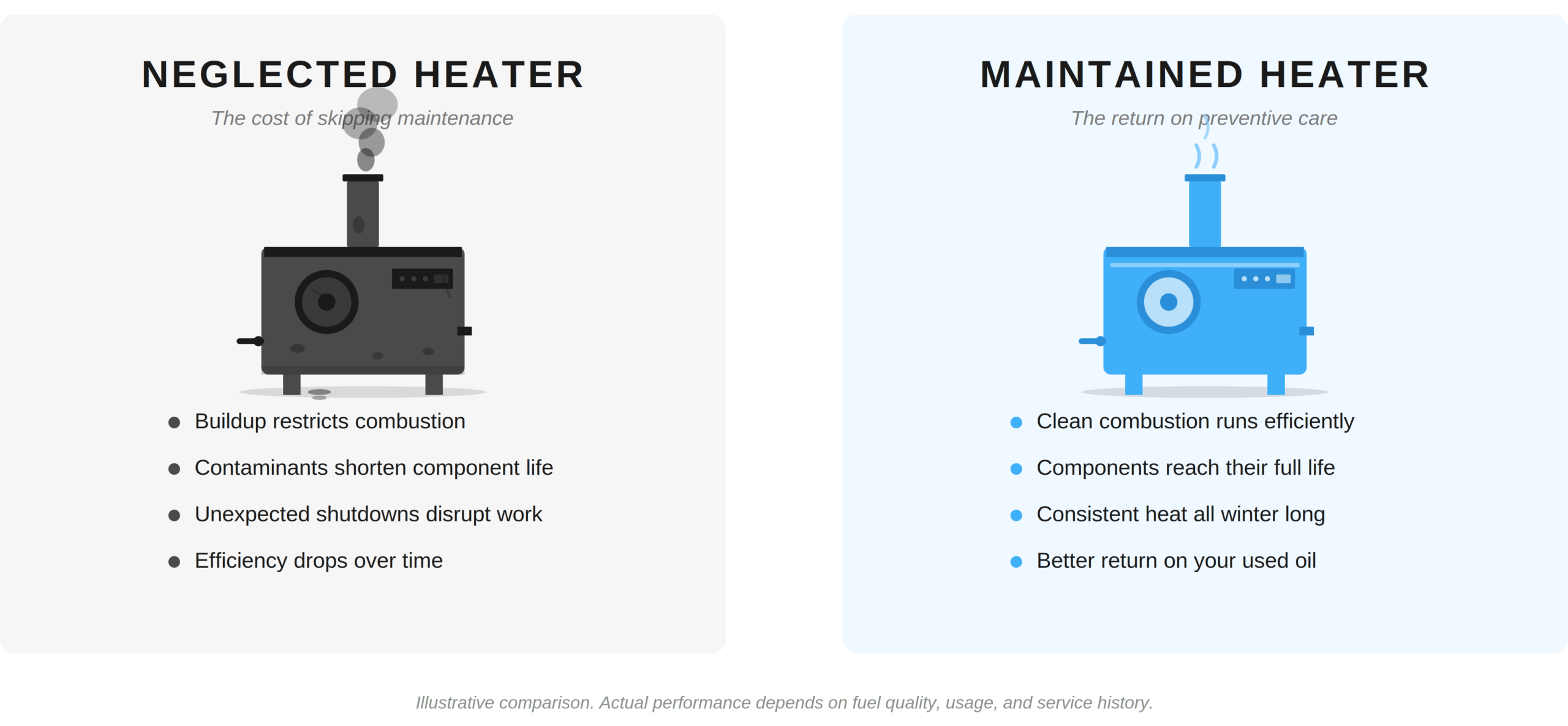
Pay Attention to the Flue and Venting System
Your waste oil heater doesn’t operate independently of its venting system.
Proper draft and unrestricted exhaust flow are critical to safe and efficient combustion.
The chimney, flue, and related components should be inspected for excessive buildup, obstructions, deterioration, or other conditions that could affect airflow.
Venting and combustion issues shouldn’t be treated as DIY troubleshooting projects. If something doesn’t look or operate correctly, have a qualified technician inspect the system.
Watch for Changes in How Your Heater Operates
You use your equipment every day, which means you’re often in the best position to recognize when something changes.
Pay attention to things like:
- Unusual smoke
- New or unusual odors
- Difficulty starting
- Frequent shutdowns or resets
- Changes in flame or combustion
- Reduced heat output
- Unusual noises
- Oil leaks
- Increased fuel consumption
A small change in performance doesn’t always mean there’s a major problem. But ignoring it until the heater stops working can turn a relatively simple service issue into an inconvenient breakdown.
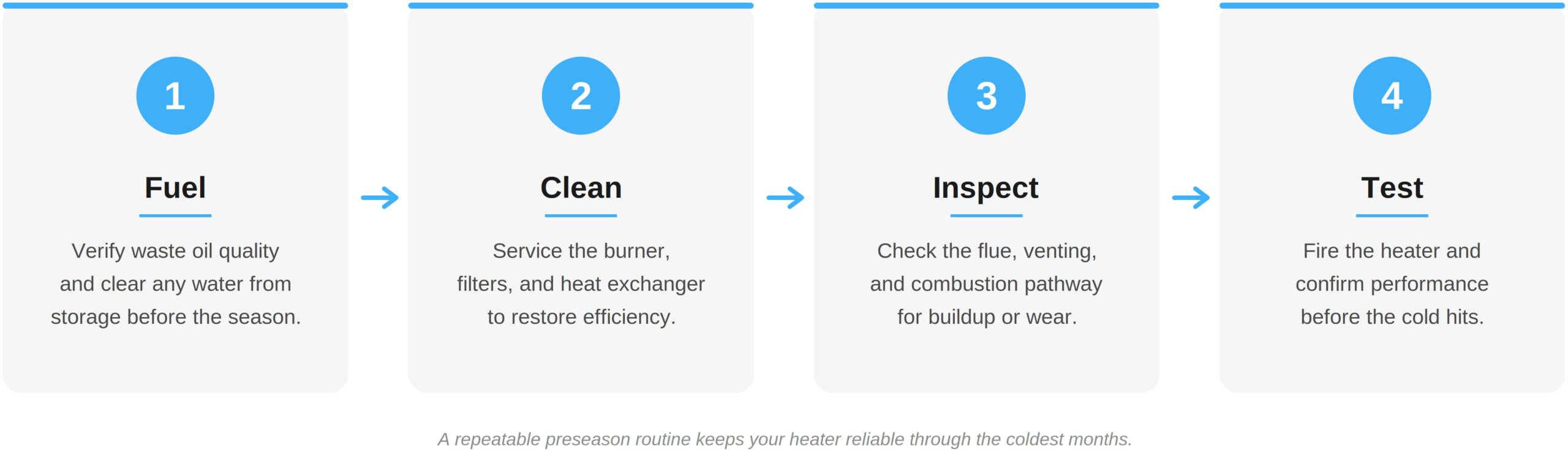
Don’t Wait Until the First Cold Day to Test It
One of the worst times to discover that your waste oil heater needs service is when the temperature drops and you need it most.
Schedule a preseason inspection before heating season begins.
That gives you time to clean the system, replace worn components, address fuel-quality issues, and make necessary repairs without the urgency of a cold building.
For businesses in Colorado and Wyoming, preparing well before winter can make a significant difference. there’s a major problem. But ignoring it until the heater stops working can turn a relatively simple service issue into an inconvenient breakdown.
Use the Correct Replacement Parts
A waste oil heater is a system, and its components are designed to work together.
When something needs to be replaced, using the correct part for your specific heater helps maintain proper performance and reliability.
Keeping common maintenance items on hand can also reduce downtime during heating season, particularly for businesses that rely heavily on their waste oil heater as a primary or supplemental heat source.
Have Your Waste Oil Heater Professionally Serviced
There are routine maintenance tasks an equipment owner can perform, but combustion equipment also requires specialized knowledge.
A trained technician can inspect the system as a whole, identify developing problems, verify that components are operating correctly, and perform maintenance that may be difficult to complete properly without the appropriate tools and experience.
Professional preventive maintenance can also uncover small problems before they turn into expensive repairs—or leave you without heat in the middle of winter.
Preventive Maintenance Is an Investment in Equipment Life
It’s easy to put off maintenance when a waste oil heater appears to be running normally.
Preventive maintenance isn’t just about fixing what’s broken. It’s about keeping small issues from becoming larger ones — and about getting the most value out of the used oil your business already generates.
Keeping your fuel clean, controlling contamination, maintaining the burner and heat exchanger, inspecting filters and venting, and addressing changes in performance can all contribute to a longer, more reliable service life.
And when your heater is converting used oil into heat for your facility, keeping it operating efficiently helps you continue getting value from something your business might otherwise have to pay to dispose of.
Keep Your Waste Oil Heater Ready for Heating Season
Whether you own an EnergyLogic heater or another brand, H2O Power Equipment services waste oil heaters from a variety of manufacturers and can help keep your equipment operating reliably throughout the heating season.
Need a new system? H2O Power Equipment is also an EnergyLogic waste oil heater dealer, offering waste oil heating solutions for shops, fleet facilities, equipment operations, and other commercial and industrial applications.
Whether you need preventive maintenance, troubleshooting, repairs, replacement parts, or help determining whether it’s time to replace your existing heater, our team is here to help.
Don’t wait for the first cold morning to discover your waste oil heater needs attention. Scheduling preventive maintenance before heating season gives you time to address potential problems before you depend on your heater every day.
Denver Headquarters
H2O Power Equipment | (303) 287-7561 | Mon–Fri: 7:30 AM – 4:30 PM
Colorado Springs
H2O Power Equipment | (719) 434-4779 | Mon–Fri: 7:30 AM – 4:00 PM